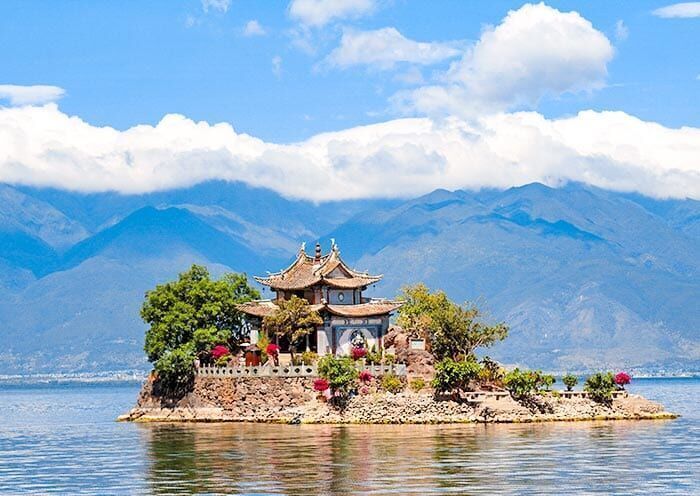
In the deep folds of Yunnan, the Tea Horse Road has shed its glitz, presenting a UNESCO-listed heritage stay woven with earthen walls, aged wood, horse bells, and roasted tea, a narrative about time and existence.
In the early morning, mist rises from the bottom of the Lancang River valley, drenching the cobblestone path in ink. You step over the threshold of the old house barefoot, your fingertips brushing over the doorframe soaked in the sweat of the muleteers over a century— the coarse wood has aged into a patina, like a layer of warm old skin. This is the beginning of wabi-sabi: imperfect things, in the passage of time, have become their own religion.
The earthen walls are pounded from the earth, with fragments of grass stems still embedded in the nail grooves. After the rain, the base of the wall shows faint blue mycelium, and the air is filled with the earthy scent of moisture. Light slices through the high windows like a thin blade, slicing through the dimly lit hall. Dust slowly swirls in the beam of light, like forgotten scriptures. Every breath you take carries the mineral taste of peeling wall plaster— that is the labor, animal power, and sand of the thousand-year-old mule caravan, all pounded into the walls.
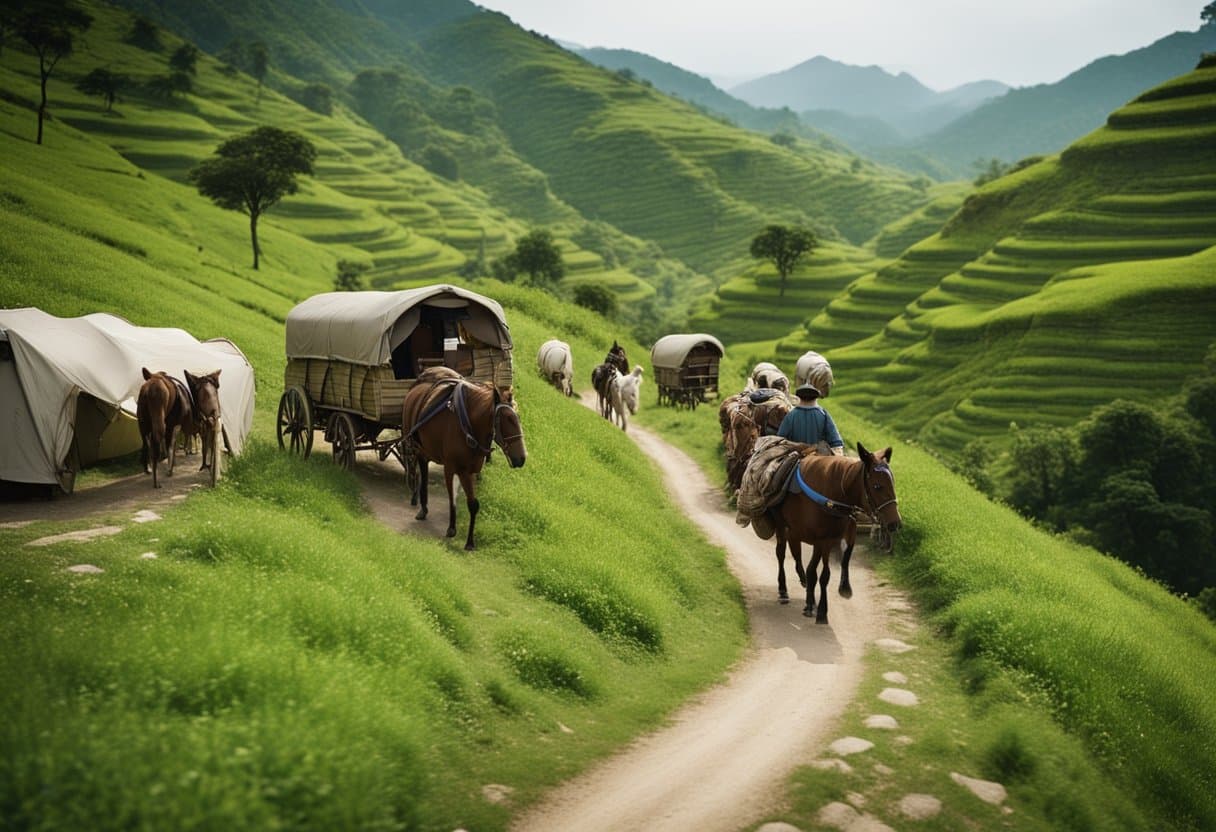
The copper pot sits on the hearth, its black and purple rust a legacy from the ancestors. When the water boils, the spout emits a long, mellow whistle like a distant mountain, resonating with the wind chimes under the eaves. Further away, there is an indistinct jingle of camel bells drifting from the pass— not an actual caravan, but the echoes of the mountain's memory in the afternoon. You lean in, but all you hear is the crisp sound of pine needles falling, and the heavy, rhythmic beat of the old woman next door pounding Sichuan peppercorns in a mortar.
Intangible cultural heritage is not a symbol of performance. When the Yi ethnic elder toasts the barley black, throws it into the earthen pot, and stirs out the aroma of caramel on the bright charcoal, it is a daily ritual. Hot water is poured in, the leaves swirling in the coarse bowl like amber soaked in dusk. You pick up the bowl, the warmth piercing through the clay to your palm— this bowl is unglazed, the fingerprints烙印 from the kiln fire entwined with yours. The first sip of the roasted tea is bitter like the sweat of the muleteers, but it quickly turns sweet, the tea steam reaching the top of your head.
Dinner is a pot of wild mushrooms stewed in earthenware, the milk curd bubbling on the charcoal fire, its dripping fat sparking a sweet smoke. There is no menu, only the seasonal order of the mountains: the rainy season gives us the "see-your-hand" mushroom, the dry season gives us the "dried" mushroom. A bamboo chopstick picks up a slice, it is so soft it almost slips through the筷子. It is salty and fresh with the damp earthy taste of the pine forest, as if swallowing an entire valley. The old woman pushes a bit of firewood into the hearth with a tongs, the flames leaping up, illuminating the etched lines on her face— those are the isotherms carved by the highland sun and smiles.
At night, you lie on the sturdy straw mat. Moonlight seeps through the tiles, drawing a trail of silver on the earthen walls. Outside, the stream chews on the stones all night, emitting a muffled murmur. The camel bells have stopped, leaving only your own heartbeat, resonating with the unknown mule drivers on the ancient road. It turns out that wabi-sabi is not extinction, but the light shining through the decay of all things—the cracks in the Tea Horse Road become the paths of light. You close your eyes, dreaming of a herd of horses' hooves below, their prints brimming with the starlight of the night.

Share Your Thoughts
Have you ever experienced a farm stay in China? Share your thoughts in the comments below!
Join the Discussion →Ready for a stay?
Pugui Mountain Retreat — wabi-sabi living at 22°C.
Related Reading
The Tea Horse Road: Last Memories of the Caravans
Following thousand-year-old hoof prints into the Hengduan Mo
Qujing: Summer Healing at the Source of the Pearl River
Year-round 15°C coolness, the pure source of the Pearl River
Lijiang: A Summer Retreat in the Naxi Kingdom
Coolness at 2,400 meters, the mystery of Naxi Dongba culture