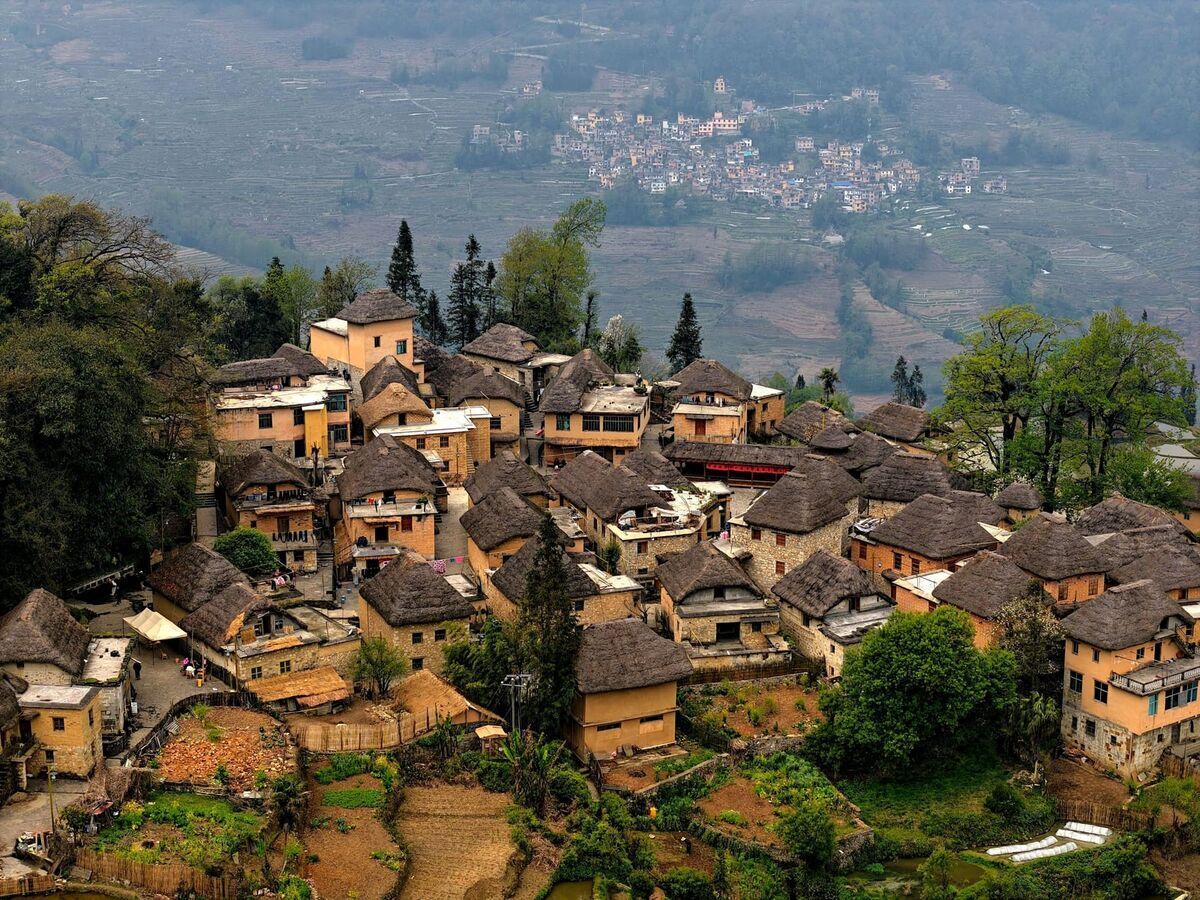
In the depths of Yunnan Plateau's folds, Shengguantun offers an almost Zen-like wilderness luxury camping, embedding the aesthetics of wabi-sabi into the flora, earth, and morning mist. Here, there are no superfluous embellishments; only the wind, light, taste, and the silence itself.
As the car winds through the heart of Yunnan's mountainous expanse, the name Shengguan屯 carries the lingering aura of an old official road, emerging between the pines at 2,000 meters above sea level and terraced rice fields. The campsite is without walls, a few earthen-colored tents scattered along the slope, their eaves drooping like silent organs sprouting from the earth. The bare feet tread upon the rough volcanic stone path, the morning dew unrisen, the coolness of the moss between the cracks seeping up the spine—the first lesson of wabi-sabi: to accept roughness and imperfection, to let the body relearn to converse with the earth.
Inside the tents, there is a near-monoastic restraint. On a low wooden table, a coarse earthen bowl holds mountain spring water, with two wild mint leaves floating on the surface; linen fabrics hang as curtains, their folds hiding the pine whispers of the night before. Light filters through the canvas roof's skylight, casting slow-moving light spots on the earthen floor, as if time itself is breathing. In the afternoon, the slanting sun slices through bamboo curtains, tracing slender shadows on the rough walls, the dust floating in the light beams like gold dust, or tiny memories. You suddenly realize that what is called wabi-sabi is simply allowing light to reveal the dignity of dust.
Sound is also meticulously designed. The campsite has no sound system, only the natural acoustic field: in the morning, bird songs drop from the pine branches like dewdrops tapping on earthen jars; at noon, the wind rustles through the straw, a dry rustle like an elder turning pages of a scroll; at night, the crackling of the campfire, the sharp snaps of the wood, stir a few distant barks, then everything sinks into deeper silence. Even footsteps are deliberately softened—the manager, in soft-bottomed cloth shoes, taps the door frame with a wooden plate when delivering meals, as if afraid to disturb the land's dreams.
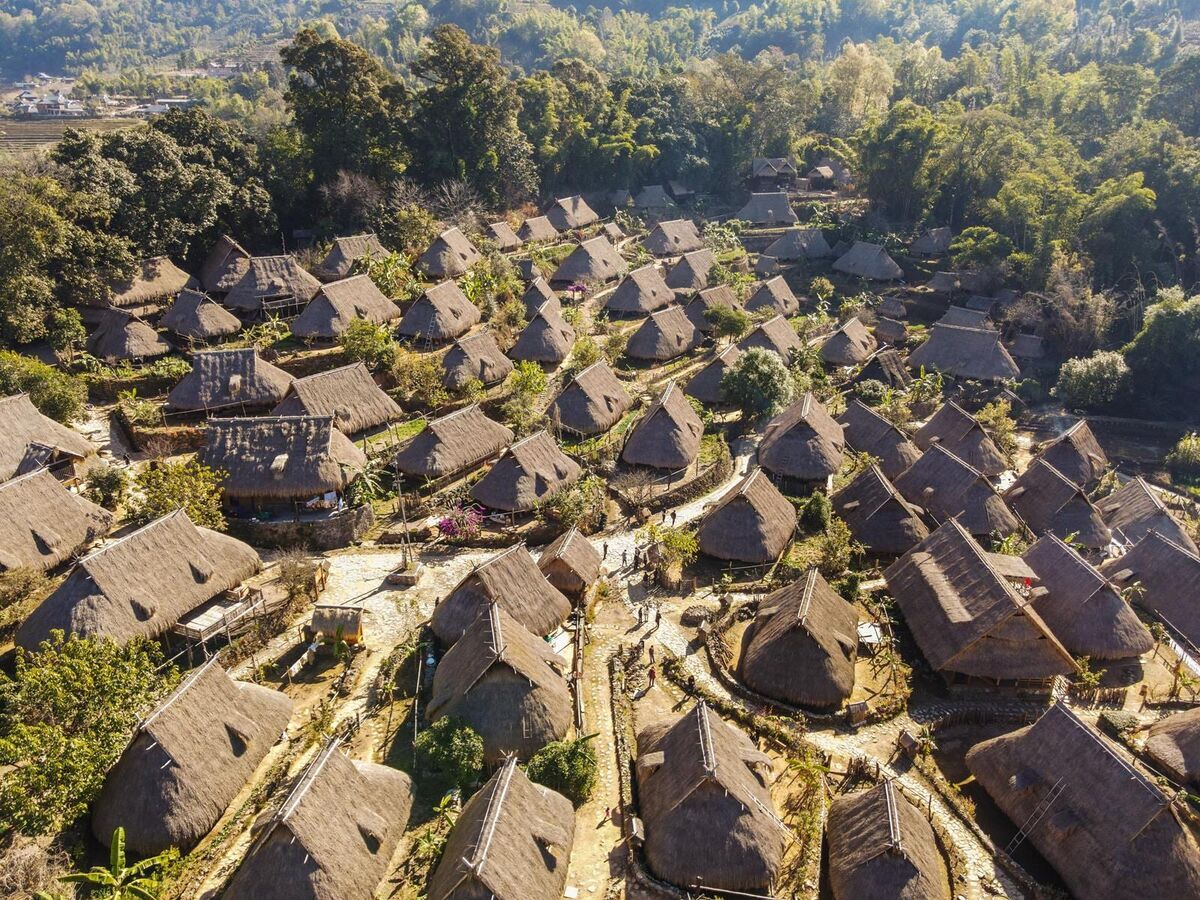
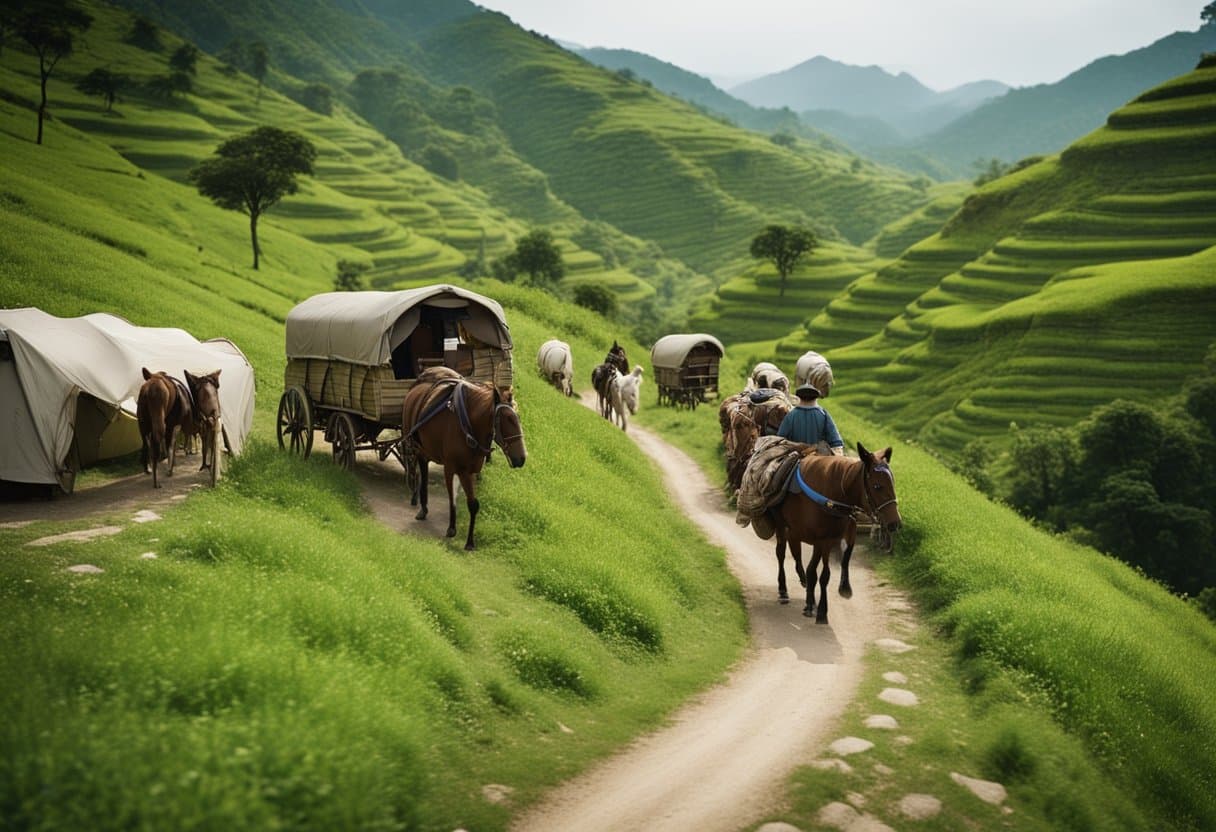
Food is the climax of this retreat. Dinner is on the veranda, the charcoal faintly red, the grill holding local black pork, its fat dripping and sparking. The dipping sauce is nothing but chili, salt, and wild pepper, the spiciness piercing to the root of the tongue, like mountain winds filling the chest. A pot of mushroom soup bubbles in an earthen jar, the freshness of the chicken fungus, the green head mushroom, and the liver mushroom, the essence of rain-soaked earth and humus, as if you can hear pine needles falling when you take a sip. The staple is bitter buckwheat cakes, the coarse grains scraping the throat, leaving a faintly bitter aftertaste—that bitterness reminds you of the breath of the caravans on the Tea Horse Road, and the hidden memories of the old road in the name Shengguan屯.
As night deepens, the candle flame flickers within the copper lampshade, casting the tent's shadow on the grass, like a large, gentle hand. You lie on the hard wooden bed, covered by a thick cotton blanket, listening to the distant stream winding through the stones. Suddenly, raindrops begin to tap on the canvas, at first sparse, then dense, like countless tiny fingers striking the drum of the earth. In the rain, you remember the rain under the eaves of your childhood home, remember all the forgotten, slow moments.
In the morning, the mist rises from the valley floor, enveloping the campsite in a milky silence. You walk to the cliff's edge, watching the sea of mist roil beneath, dewdrops rolling from the grass tips into the earth, without a sound. At this moment, the wild luxury of Shengguan屯 is no longer an adjective, but a way of being—it teaches you how to measure silence with your body, to approach the essence with your senses. When you leave, the soles of your shoes still沾着 red earth, the hem of your clothes leaving the scent of pine smoke, and in your heart, some of the senses dulled by modern life are gently waking up.

Share Your Thoughts
Have you ever experienced a farm stay in China? Share your thoughts in the comments below!
Join the Discussion →Ready for a stay?
Pugui Mountain Retreat — wabi-sabi living at 22°C.
Related Reading
Pearl River Head · The Silent Place
Amidst the mist at the source of the Pearl River and the rus
Journey Diary in the Rainy Season of Lake Fuxian: Solitude in the Mist
The Lugu Lake in the rainy season is not the iridescent blue
Harmony Alley: A Simple Abode
The tranquility of the rainy season is an enduring dialogue