
Journeying Yunnan's ancient Tea Horse Road is less about the route and more about the rhythm of stones, the pale of morn
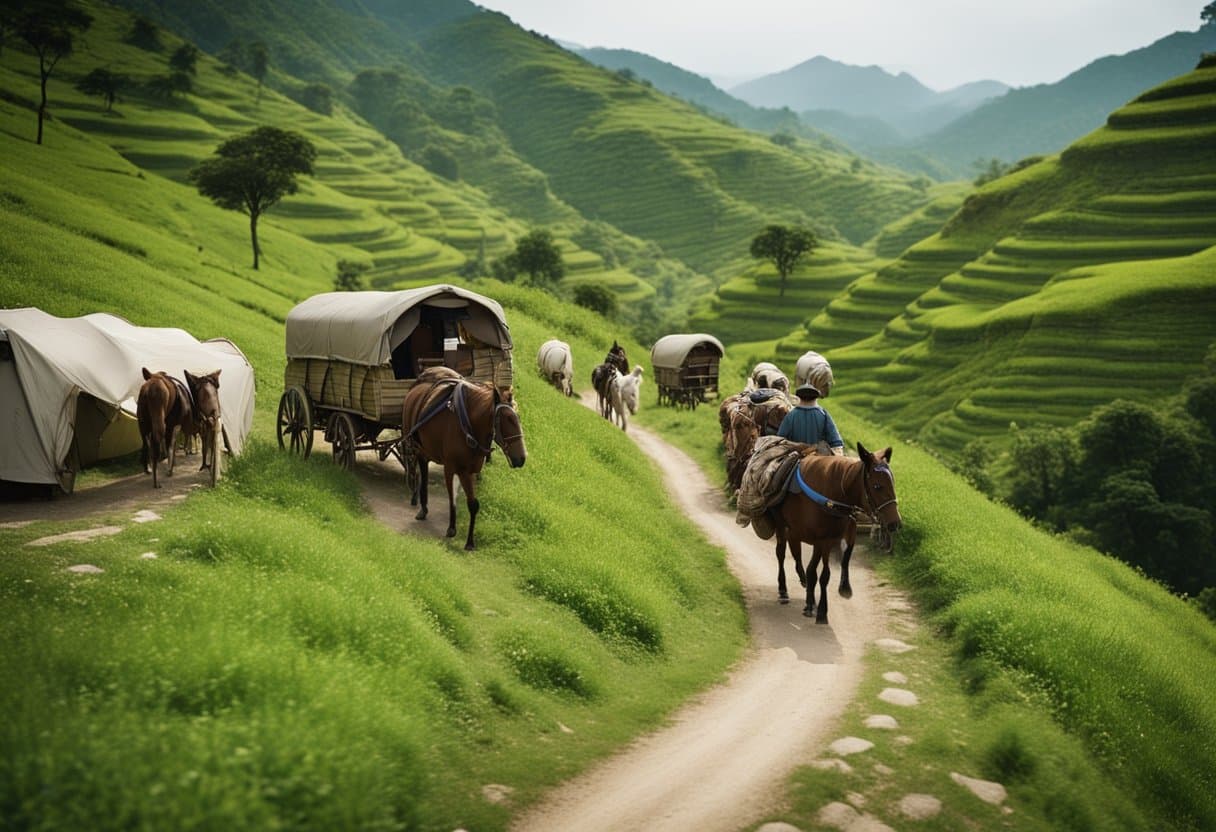
The Tea Horse Road never asked to be paved. It remains a memory of hooves and packed tea bricks, of caravan bells dissolving into mountain fog. To travel it today, luxuriously, is to do what the Ming traders never could: stop. Pause in a Shaxi courtyard, where a single gnarled persimmon tree drops its fruit onto wet slate. The eaves are dark, aged by monsoon rain; the doorframe is worn to a concave honey of centuries. This is wabi-sabi in its purest form—not a design trend, but a surrender to time.
Your driver, a Lisu man with a quiet smile, navigates the switchbacks in a black Range Rover. The windows are down because you ask. Air carries the mineral bite of the Jinsha River far below, and the high, sweet whistle of a bird you cannot name. Transitioning from forest tea plantations to alpine pastures, the light changes from moss green to bone white. Yaks graze beside a path of hewn granite, their fur matted with burrs. In the distance, a stupa flutters with prayer flags—not for show, but weather-worn, their indigo and saffron fading into the grey sky.
Your lodge is a blur of minimalism: whitewashed rammed-earth walls, a low bed of fir planks, a single window framing the Meili snow range like a hanging scroll. There are no plastic bottles. A thermos of warm water sits on a hand-thrown clay table. The floor is polished concrete, with a small crack running through it—the owner explains it came from the 2015 earthquake, and they left it intentionally. “It makes the room honest,” she says. You sit on a linen cushion, sipping a pale infusion of old pu'er, its flavor like wet forest floor and distant smoke. Honest indeed.
Dinner is a quiet ceremony in a lantern-lit kitchen. The chef, a Naxi grandmother, serves a broth of wild mushrooms and matsutake, then a slice of ham cured for two years in the mountain wind. Rice is steamed in a bamboo tube, fragrant and slightly resinous. Nothing is decorated; a single nasturtium leaf sits on the ceramic plate, already wilting. You eat slowly. Outside, a horse snorts, and the leather of its saddle creaks as it shifts weight. The sound is ancient, older than any road sign.
At dawn, you walk to the remains of an old trading post. Moss covers a stone arch, and a broken millstone leans against it. There is no signage. This is the luxury of emptiness: no ticket booth, no gift shop. Just you, the fog, and the faint echo of commerce turned to silence. Standing there, you understand—wabi-sabi is the fatigue of perfection, and Western minimalism is its architecture. Together, they teach you to see the haul as sacred, the crack as memory, the detour as arrival.
The Tea Horse Road is not a place you finish. It is a place you let finish with you, riding the rhythm of hoof-beats that still rumble beneath the modern tarmac. Pack light. Leave your expectations. Let the worn paths hold you, and you will find luxury not in what is added, but in what is left out.

读过之后,想来住几天吗?
朴归山居 · 云南升官屯 — 22°C 的东方侘寂旅居。
相关阅读
The Quiet Luxury of Yunnan: Where Wabi-sabi Meets Western Minimalism(云南旅居)
Beyond the crowds of Dali, a hidden valley in Yunnan unfolds
Yunnan's Hidden Glamping Paradise: Where Wabi-Sabi Meets Western Minimalism(云南旅居)
Among Yunnan's mist-wrapped mountains, a new breed of wilder
Wabi-Sabi and the Wired Life: A Digital Nomad's Yunnan(云南旅居)
In the mist-wrapped mountains of Yunnan, ancient Chinese imp