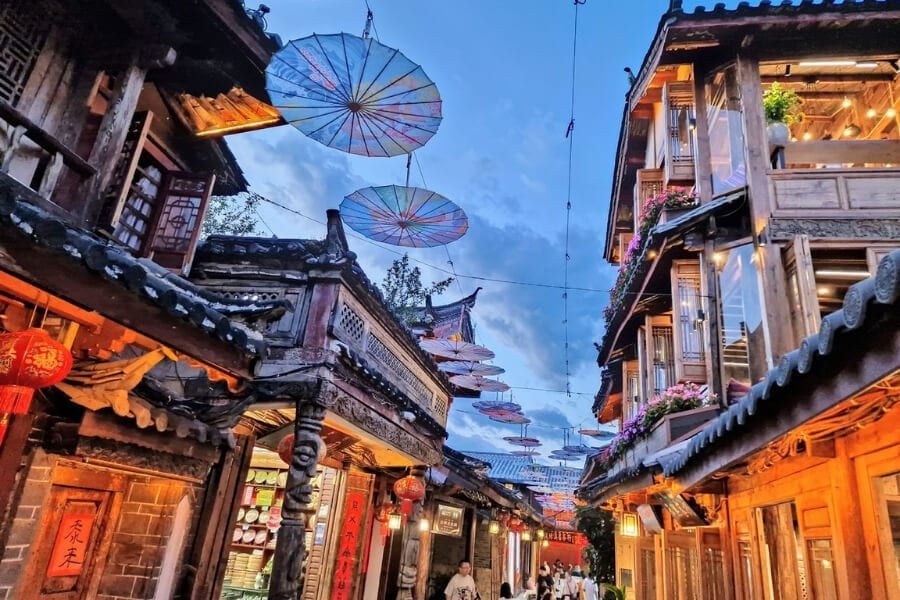
In the mist-wrapped hamlets of Yunnan, where weathered timber meets whitewashed walls, luxury is redefined as the profou
Dawn arrives not with an alarm, but with the clatter of a wooden bucket against a well-worn stone trough. You wake in a restored courtyard home in Shaxi Old Town, where the only LED light is your own phone, and the only sound is a rooster's distant, philosophical complaint. The air smells of damp earth, pine smoke, and the faint sweetness of last night's pu'er tea. This is Yunnan's authentic village experience—a luxury brand that no five-star hotel can duplicate.
The bed, a simple platform of chunky elm, is dressed in handmade cotton that has been washed until it's as soft as memory. The walls are a study in wabi-sabi: lime plaster patched with mud, displaying cracks that tell a hundred years of monsoon and sun. Here, Western minimalism finds its Eastern ancestor. You don't need cushions or clutter; you need the honest grain of wood, the imperfect symmetry of hand-painted shutters, and a single branch of winter jasmine in a dusty ceramic vase.
Slip on cloth slippers and walk the lane. The stones are polished by centuries of feet, their surfaces gleaming like dark jade after last night's rain. You hear the rhythmic thwack of a knife on a giant wooden chopping block—a grandmother preparing breakfast. Her kitchen door is open, and you catch the mineral aroma of fresh tofu being pressed between stone plates, the sharp brightness of pickled mustard greens, and garlic sizzling in hog lard. She nods, not with forced hospitality, but with the serene acknowledgment of one who belongs here. You are the guest; the village is the host.
The morning light is a slow revelation. It filters through the lattice of a centuries-old sluice gate, casting a pattern of moving water-shadows on a whitewashed wall. You follow the sound of rushing canal water—a constant, braided whisper that runs like a nervous system through the old town. This water is the soul of Yunnan villages: it washes, it irrigates, it turns small prayer wheels at a Buddhist stupa, and in the evening, it carries away the day's exhaustion.
Lunch is taken in a courtyard with a low stone table. A clay pot bubbles over a charcoal brazier, releasing the earthy umami of wild mushrooms gathered from the pine forests above. You eat slow-fermented rice noodles with a single slice of cured ham, so translucent you can see the grain of the meat. There is no menu, no music, no Wi-Fi. The only decoration is the steam rising into the cool mountain air, and the distant blue of the Cangshan range framed by a tilted roof.
As dusk approaches, the village turns golden. Wooden walls absorb the warm light and radiate it back, like living, breathing objects. Somewhere, a bamboo flute plays a hesitant, wandering melody. You sit on a low stool, wrapped in a woolen blanket, watching a carpenter plane a fresh piece of pine. The shavings curl and fall, carrying the scent of resin and purpose. This is the true luxury of Yunnan: not to be entertained, but to be still; to witness the honest, unhurried labor of life. And to realize that wabi-sabi is not about imperfection—it is about the perfection of what remains when you subtract everything unnecessary.

读过之后,想来住几天吗?
朴归山居 · 云南升官屯 — 22°C 的东方侘寂旅居。
相关阅读
The Quiet Luxury of Yunnan: Where Wabi-sabi Meets Western Minimalism(云南旅居)
Beyond the crowds of Dali, a hidden valley in Yunnan unfolds
Yunnan's Hidden Glamping Paradise: Where Wabi-Sabi Meets Western Minimalism(云南旅居)
Among Yunnan's mist-wrapped mountains, a new breed of wilder
Wabi-Sabi and the Wired Life: A Digital Nomad's Yunnan(云南旅居)
In the mist-wrapped mountains of Yunnan, ancient Chinese imp