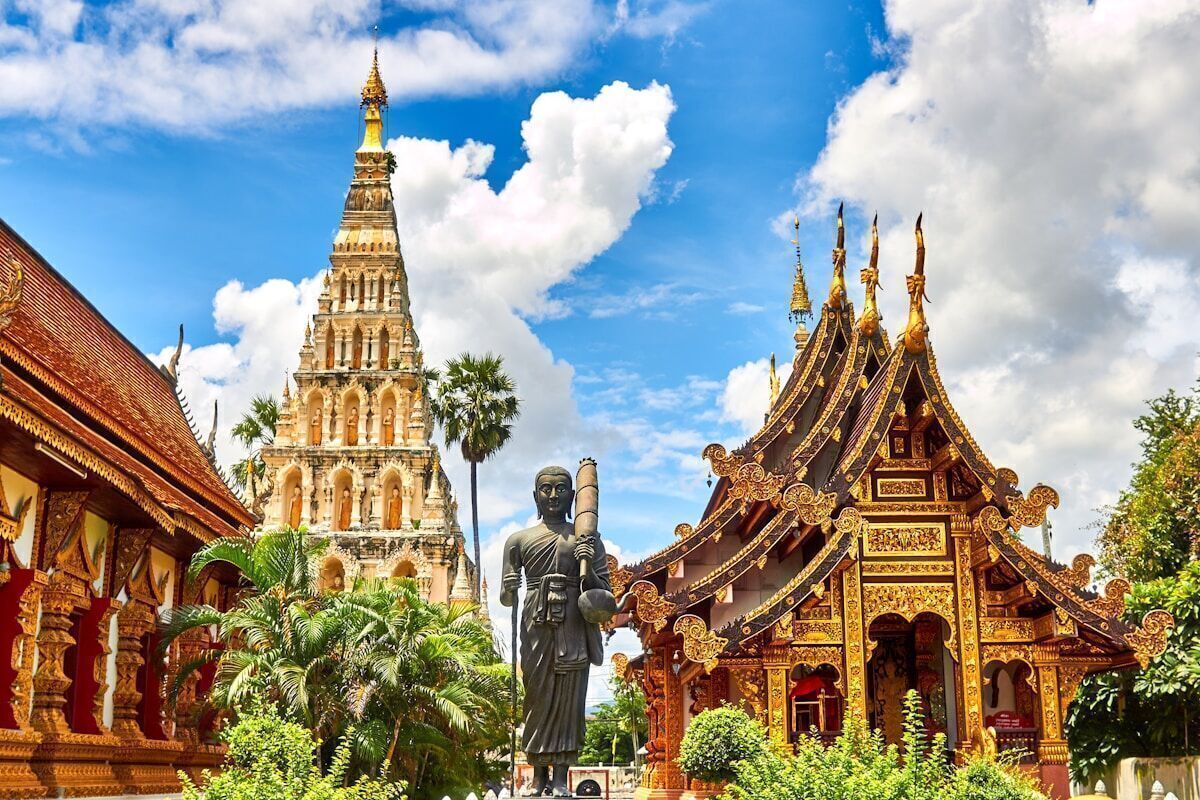
A summer escape into China's Yunnan province, where crumbling stone, shadow, and restraint craft a travel experience tha
The air smells of damp red clay, roasted rice, and the faint metallic breath of altitude. At 2,400 meters, the summer light in Yunnan is not blinding; it is milky, filtered through a thin veil of mist. On the edges of Lijiang's ancient town, I leave the crowds behind and step into a courtyard of pale rammed earth, patched with smooth, raw linen and hand-planed walnut. The floor is a matte granite, cool underfoot, with the hairline cracks of a wabi-sabi embrace. The only sound is the drip of rain from the eave groove into a shallow stone basin—a deliberate rhythm that slows time itself.
My room is a study in austere calm: a low, unmade but pressed cotton bed on a cinderblock platform, a single black leather stool, and a wall of rice-paper screens that have gone yellow with age. There is no TV, no unnecessary object. The luxury here is negative space. As the early glow pours through the paper, it creates not a blaze but a diffuse, even sheer, painting the wooden floor in a soft shade of honey. I sit on the polished concrete floor, back straight, and drink a pale, faintly bitter tea brewed in a clay pot that has browned from years of use.
Breakfast is served on a tray of off-white ceramic, mounted to a slab of unvarnished walnut. It is a composition of restraint: a single, soft-boiled egg nestled in a dimple of salt, a wedge of herbed goat cheese, a slice of dense buckwheat bread, and a small bowl of black rice congee with three drops of sesame oil. I eat slowly, without a phone, and the room sharpens. Outside, from the tarn, a bronze bell hums its low, monastic single pitch, the sound rising and falling within the wet stone walls.
Later, I trade the city for the terraced pools of Baishuitai. It is not the tourist spectacle but the limestone: the calcium curves are frosted like confectionery, yet severe, geometric. The pools are milky turquoise, clear enough for a single stranded hair. I wear a matte black linen shell, minimalist, unadorned, and I sit on a wet rock. The only sound is water laughing—a thousand tiny mouths chattering. It is a stream, a gurgle, a trickle, the shock of cold spray on my bare arms. The scene is raw, uneven, and asymmetrical—a wabi-sabi that mirrors the deliberate cleanliness of my attire, forming a perfect contrast between wild and pared-down.
Dinner is served on a dark, heavy slab of stone, a single table under a dripping banana leaf. The food is elegant in its poverty: a clear broth of wild mushrooms and three millet balls, a thin slice of pork belly crisped on a charcoal brick, and a small dish of fermented watercress with a delicate sour tang. The flavors are not loud; they are precise. I eat slowly, the clack of ceramic and metal echoing off the wet limestone.
At dusk, the trailer of the mountains softens to deep indigo. I return to a hot spring that flows over a carved basalt basin, the water temperature exactly right, and the only sound is the lazy ripple of steam. The sky is a gradient of grey-green, and the mountains are dark silhouettes, enveloping me in a quiet that feels indistinguishable from luxury. Here, in Yunnan 2026, my skin is not caressed by silk, but by stone, water, and silence. I leave with the taste of earth and mint, aware that the profoundly modern luxury is not to have everything, but to have just this—a warm rock, a cool film of sweat, a lit sphere in the fading dark.

读过之后,想来住几天吗?
朴归山居 · 云南升官屯 — 22°C 的东方侘寂旅居。
相关阅读
The Quiet Luxury of Yunnan: Where Wabi-sabi Meets Western Minimalism(云南旅居)
Beyond the crowds of Dali, a hidden valley in Yunnan unfolds
Yunnan's Hidden Glamping Paradise: Where Wabi-Sabi Meets Western Minimalism(云南旅居)
Among Yunnan's mist-wrapped mountains, a new breed of wilder
Wabi-Sabi and the Wired Life: A Digital Nomad's Yunnan(云南旅居)
In the mist-wrapped mountains of Yunnan, ancient Chinese imp