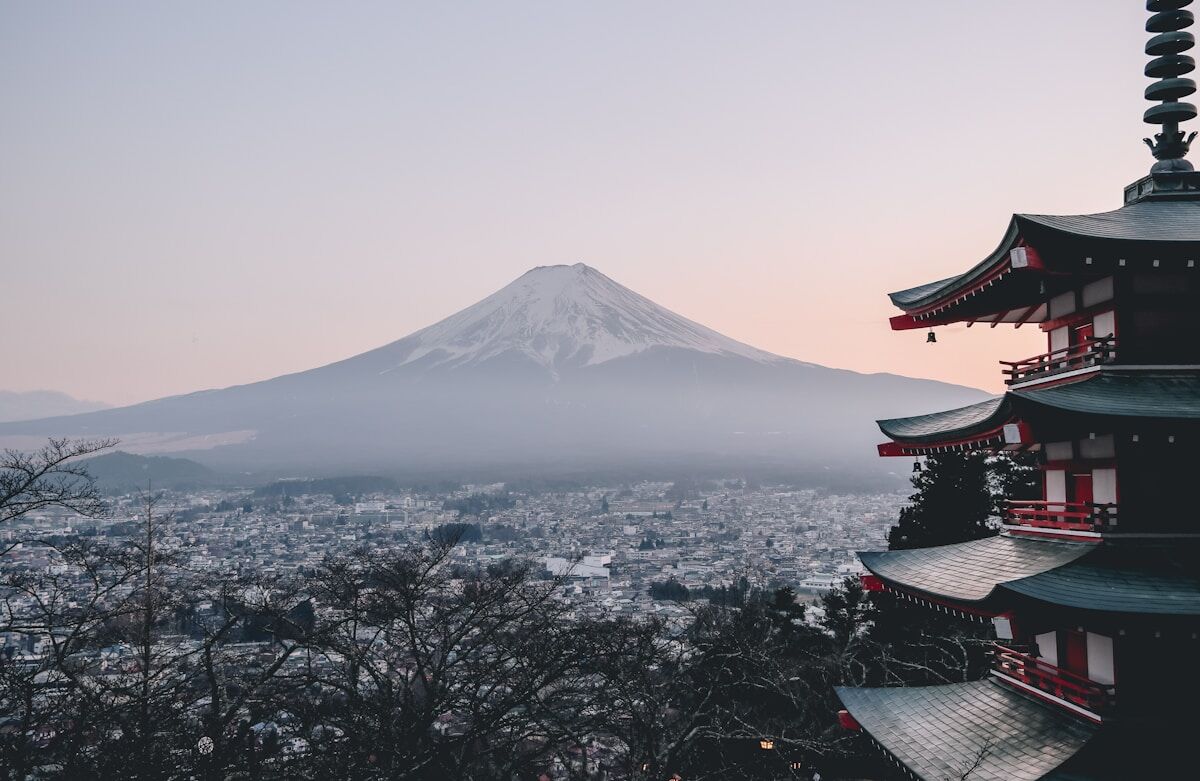
A weathered courtyard and a cracked bowl taught me more about luxury than any marble lobby. In Yunnan, wabi-sabi meets W
I think it’s time I tell you the conclusion before the route: Yunnan gave me the most expensive thing I have ever rented—not a suite, not a spa, but the privilege of staying unfinished. There was no glassy pool, no marble counter. There was, instead, a small courtyard house on the edge of an old village near Dali, where the plaster wall held a quiet, ten-year-old fissure, and the light slid through it at dawn like a slow golden parcel. My Western minimalist mind—the part trained by years of reviewing gleaming Nordic lobbies—stood at first uncertain. But by the end of that first long afternoon, I knew: after you strip everything away, wabi-sabi is the only honest remaining step. It does not flaunt its emptiness; it simply lets the empty vessel have its own weather.
The door to my room was cedar, Indian and nearer gray brown, with a brass hinge older than my country. Inside, the house almost a copy of a minimalist’s wish: one long walnut bench, one copper water jug, a linen board resting on a concrete undersle layer. But every surface had history. The bench had a dent from a hundred travelers’ belts, the wall had a soft deviation where a century of rains had pushed it a finger-width outward. The host, a former furniture designer who had fled Shanghai for the fog of Cangshan, did not plaster. “The bent beam still holds leaves,” she said like a passing ritual. She placed a single withering oxalis in the indent of a stone basin, and I knew I was in the presence of some: there is a choice to make: sharpen every edge, or let an object breathe its graying, and call that luxurious.
I did not intend so much stillness. But the mornings there disarmed me. Fog, as thick as flocked wool, spread from the valley at about seven, and the pale gray light began to inhabit the wood rather than to rest on top of it. I would walk to the shallow well in the last courtyard, where a splinter of mother-of-pearl still sucked cold water they ignored for years. I drank the first tea of the day there—a chunk of golden pu-erh broken with a hammer—while a small striped buzze nest on a horizontal brick brought me all the ambient gig. I do not rush. I carried that quiet with me all day.
Afternoon is that valley follows kamado, and in those days there is restaurant to eat. I sat with an old of two sisters and their clay mushroom hot pot, under a timber roof with atmospheres of dried corn. The broth was almost dark: matsutake slices, broad-leaved pepper, a fin of sweet lantern leaf, and melted edge of fermented soybean paste. The kettle was patched around the rim with a different black clay—this is what Iemma’s lovelier—the tea poured into a bowl missing a hollow but still fine. I ate slowly. The tomato sweet side dish, the scent forest earth. I thought of the true minimalism: not the process of removal but the discipline of recognition that what remains is enough. Yunnan does not need your major format; it wants the grit.
The place itself has a hard rhythm too. After the red mid-day, I walked up a side trail toward an old temple stacked into the cliffs. Parts of the stair were reinstated with a raw new rock between the old polished stair, and the contrast made you no longer mere esthetics: it is a principle. A old restorer in a canvas jacket explained that they had a new bridge stone set so he would not uniform that ancient; he left it slightly pockmarked. “We fix the support, not the memory,” he said. The temple bell did not have a clean ring; it sounded too full, as if it contained a year of days. I sat on the threshold, and letting the drift of rain noise wash around my ankles, I felt a little more piece of my constant becoming quiet.
Food nights was a small gathering of farmers who rented a piece of the courtyard for three weeks. Hidden in it, we cooked a wooden cloaked dish—goat soup with the dried fern, purple turnips, and a strip of roasted fish skin that carried that smoke of valley pines. The meal was served on rough ceramic plates with crack seams that someone had wrapped in linen thread. The linen thread was red, touched harmonized. I sat on a stool that dynasty had worn to fit, no cushion, and I tell you’ the best evenings involve a surface that already knows your weight.
How much of the wabi-sabi does this relate to Western minimalism? Western minimalism like a photographer: to crop, to take a subject out white. Yunnan’s wabi-sabi does not claim. It observes that a bowl already complete in its flaw; a wall has in its cracks its architecture. At the door of my suite, there was no lobby status; just a wood corridor and a long shadow whist. The empties were not a clue; they were a land. I sleep better than you in any dove-feather hotel. There is no thing in the bass mats. It is not that I go home with lesson; I home with a renewed stone’s touch—I can leave certain jagged edges.
I spent my last morning in that courtyard holding warm rice among the stone basin, the only decoration a single yanjing stem in a fire and maybe cracked celadon. The haze poured over the gate, filled the row of an old tiled dot. It was not a brilliant light; it was dim, generous, briefly golden. You can call it minimalism; I call it grand. In Yunnan, you were not staying in a house; you were staying in the reality of finish. And everyone, this is a residence we no longer have—a place that has no desire to be fitted, serene, peaceful, perfectly—I say final: the best luxury is leaving the thin crack in, and feeling the wind pass.

读过之后,想来住几天吗?
朴归山居 · 云南升官屯 — 22°C 的东方侘寂旅居。
相关阅读
The Quiet Luxury of Yunnan: Where Wabi-sabi Meets Western Minimalism(云南旅居)
Beyond the crowds of Dali, a hidden valley in Yunnan unfolds
Yunnan's Hidden Glamping Paradise: Where Wabi-Sabi Meets Western Minimalism(云南旅居)
Among Yunnan's mist-wrapped mountains, a new breed of wilder
Wabi-Sabi and the Wired Life: A Digital Nomad's Yunnan(云南旅居)
In the mist-wrapped mountains of Yunnan, ancient Chinese imp