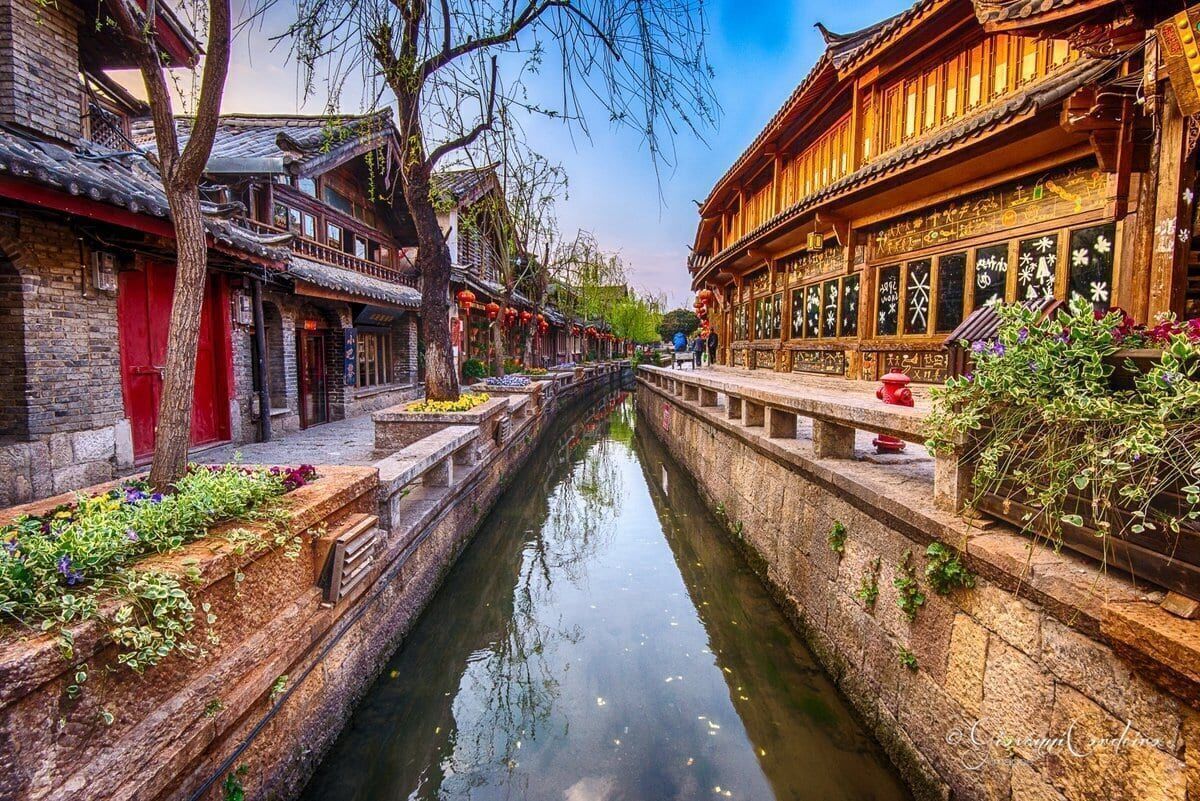
Deep in the hills of Yunnan, a new kind of luxury farm stay marries rustic wabi-sabi with Western minimalism—where cracked earth walls hold
The sunrise arrives as a palewater wash through knotted pine slats, spilling across a floor of tamped rammed earth. This is not the manicured gentility of a Shanghai property or the polished glass of a Singapore skyline. This is a luxury farm stay in Yunnan, where the Japanese notion of wabi-sabi—beauty in imperfection, transience, and the marks of weather—meets the disciplined restraint of Western minimalism.
The lodge sits on a working farm outside Dali, among terraced fields and ginkgo groves. From the outside, it looks like a barn that has weathered decades: walls of thick, ochre rammed earth, a roofline slightly off-kilter, windows of smoked oak. But stepping inside is a study in quiet intention. The interior is washed in lime plaster, so subtly imperfect that your eyes trace tiny fissures, like drying riverbeds. Floors are raw concrete, warmed by woven wool rugs and a single low sofa of ash-gray linen. There is no clutter. A ceramic vase holds a single stem of dried yarrow. The only art is the sun, moving slowly across the wall.
The bed is a low platform of solid cedar, dressed in creamy hemp sheets and a heavyweight blanket of undyed wool. At dawn, the only sound is a distant rooster and the trickle of an irrigation channel—your private grain of silence. The French doors open to a private courtyard, with a shallow concrete basin holding rainwater, where a rusted steel scraping tool rests beside a smooth pebble. It feels less like a hotel and more like a meditative sculpture.
Food is a ritual of place. Meals begin in the open kitchen, where polished soapstone and a wood-fired oven dominate. Breakfast is a bowl of congee, thickened with Yunnan rice, topped with pickled mustard greens and a single poached local egg. The bread is a dense sourdough, baked with heritage wheat from the farm, served beside butter churned from water buffalo milk. Lunch might be wild mushrooms pulled from the pine forest that morning, sautéed with garlic and smoked salt, and wrapped in a soft bamboo wrap. At dusk, the chef lights a fire and roasts a whole farm salmon over pearwood, drizzling it with honey from the apiary. Every sip of local green tea carries the memory of the mountain air.
Evening comes as the mist climbs the surrounding ridges. The courtyard lamps are candles embedded in lumps of hand-carved sundried clay, so the light seems to breathe. Somewhere, a bamboo wind chime shudders. The silence is layered—rye, soil, and distant laughter. Lying on a chaise longue set under a plastered arch, you feel the weight of a Western minimalism tempered by the wild, asymmetrical Chinese landscape.
This is not luxury as perfection. It is luxury as authenticity—of texture, of time, of imperfection made deliberate. In this eroded palace of rammed earth and linen, you are not a guest but a temporary occupant of a living sculpture, one that will soften, stain, and settle with each passing season. And that is entirely the point.

Share Your Thoughts
Have you ever experienced a farm stay in China? Share your thoughts in the comments below!
Join the Discussion →Ready for a stay?
Pugui Mountain Retreat — wabi-sabi living at 22°C.
Related Reading
The Quiet Luxury of Yunnan: Where Wabi-sabi Meets Western Minimalism
Beyond the crowds of Dali, a hidden valley in Yunnan unfolds
Yunnan's Hidden Glamping Paradise: Where Wabi-Sabi Meets Western Minimalism
Among Yunnan's mist-wrapped mountains, a new breed of wilder
Wabi-Sabi and the Wired Life: A Digital Nomad's Yunnan
In the mist-wrapped mountains of Yunnan, ancient Chinese imp