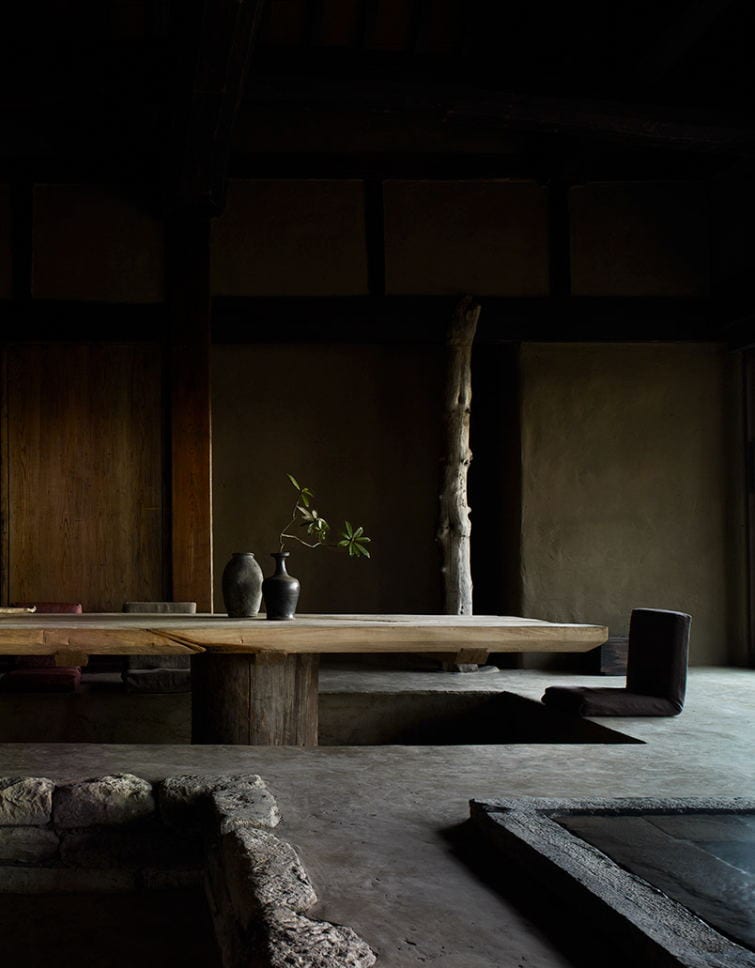
Amidst volcanoes and wetlands, guided by hot springs, nestled among wood, stone, water, and light, a serene retreat is established—a contemplation on time and the body.
The morning mist had yet to disperse, casting a moist sheen on the cobblestone path. The morning in Tengchong begins with a bird's call—a sound clear and pure, like dewdrops falling into a warm bath. I walk barefoot across the cool wooden corridor, the soles of my feet tracing the fine grain of the old柚wood, smooth and warm from the years of wear.
Opening the sliding doors, I see the hot spring pool steaming gently, the mist refracting rainbows of light in the morning sun before dissipating among the cobwebs at the eaves.
These hot springs are not a noisy amusement park, but a serene sanctuary. The pool is carved from a single block of volcanic rock, its rough texture covered in light brown minerals, with a few clumps of ferns growing at the edges, their leaves glistening with dew. The warmth of the sulfur is not a sudden assault but a subtle embrace, weaving from the ankle to the waist, then slowly seeping into the spine. I rest my back against a stone pillow at the bottom of the pool, looking up to see a patch of azure sky in the courtyard—cloud shadows moving slowly, as if time itself were walking. The gentle babble of the water is the only language, occasionally interrupted by the rustling of bamboo in the wind, which then falls back into silence.
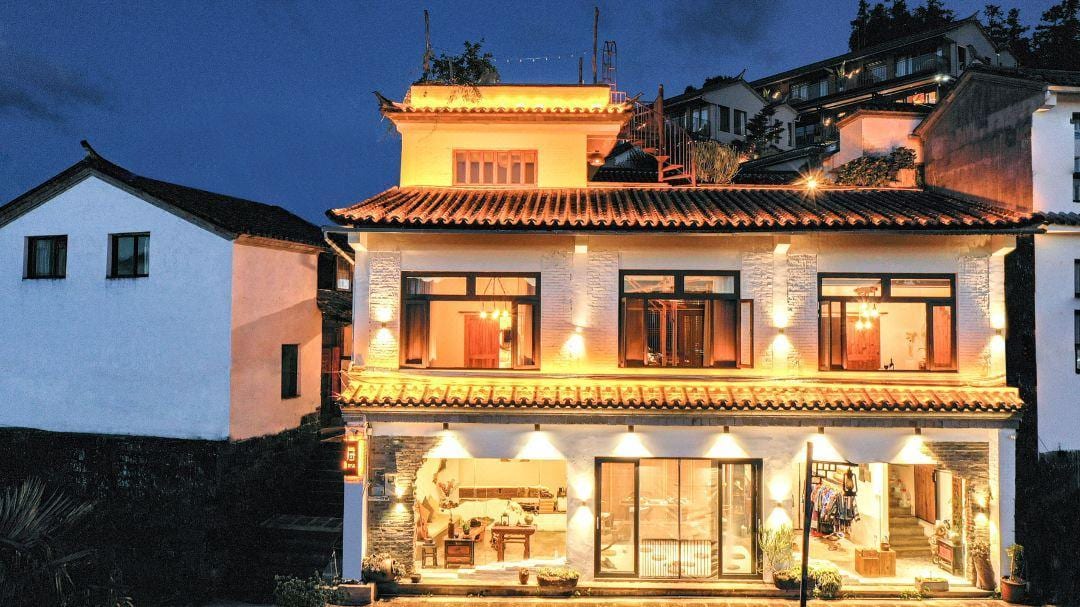
By midday, the sun slants through the tea room. On the low table, a rustic earthenware pot is brewing a local wild tea, the tea's color reflecting the shadows of the ancient wutong tree outside. I lift the earthenware cup, feeling the fine cracks in the ceramic wall, a kiss from the kiln and the passage of time. The tea is rich and smoky, harmonizing with the scent of eucalyptus oil in the air. The butler steps forward with a plate of pine flower cake, pale and fluffy, melting on the tongue. She whispers that it is made from local pine pollen and wild honey, sweet but restrained, like this hot spring—not eager to please, yet deeply ingrained.
In the evening, the light grows languid. Dressed in a linen bathrobe, I walk towards the meditation pavilion beside the hot spring pool. The pavilion is built of black walnut wood, the joints showing fine gaps through which the setting sun leaks, casting golden lines on the tatami mat. In the distance, the volcanic range stands silent and majestic like the backs of beasts. I sit cross-legged, listening to my breath and the faint sound of the water. For a moment, the phone screen is left behind in the bedroom, unheeded by the red notifications on WeChat—perhaps true luxury is not in owning more, but in the ability to let go of everything, to be alone with one's own body temperature.
At night, a paper lantern is lit beside the hot spring pool, its soft glow casting the water into a mirror of ancient bronze. I step into the water again, the temperature slightly warmer than during the day, enveloped in the steamy warmth and the scent of herbal bags—mugwort, atractylodes, and mint, freshly prepared by the butler in the afternoon. The stars above grow brighter, and occasionally a meteor streaks across the sky. I close my eyes, allowing the warmth of the hot spring to seep into my bones. In a daze, I recall the beauty of wabi-sabi—not perfection in imperfection, but richness in its incompleteness; not eternity, but the preciousness of the moment.
The next morning, I wake to the sound of birds, feeling as soft as crumpled rice paper. Opening the window, dewdrops form crystal chains on the spider webs. The butler brings a bowl of white rice porridge, accompanied by pickled ginger and roasted seaweed, simple yet fitting. I suddenly realize that the healing in Tengchong does not lie in the minerals of the spring water, but in teaching people how to live gently with time—not in haste, not in competition, like the moss on the volcanic rock, growing slowly over millennia. This journey of residence is not an escape, but a return—a return to the original truth of the body, to the depths of silence, where there are the most abundant sounds.
Share Your Thoughts
Have you ever experienced a farm stay in China? Share your thoughts in the comments below!
Join the Discussion →Ready for a stay?
Pugui Mountain Retreat — wabi-sabi living at 22°C.
Related Reading
A Zenith of Aesthetics, Heart to Dongba
Beyond the carved beams and painted eaves of the ancient cit
Serenity Journey in Shangri-La: Encountering Aesthetics of Wabi-Sabi Amidst the Plateau's Light and Shadow
At the foot of Shika Snow Mountain, an old Tibetan rammed ea
Solitude in the Heart of the Rainforest: An Elite Residence Diary from Xishuangbanna
As the morning mist drifts over the eaves of the Dai village