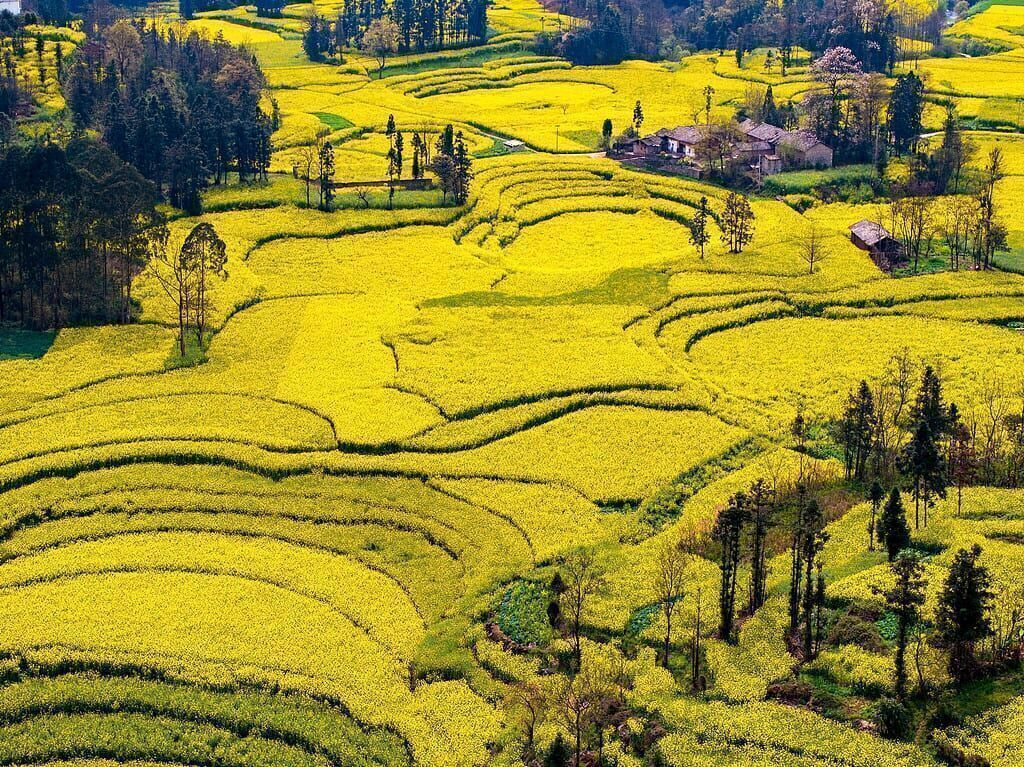
At the foot of Shika Snow Mountain, an old Tibetan rammed earth house has been transformed into a minimalist retreat. Sunlight filters through the skylight onto the rough earthen walls, the warm aroma of butter tea intermingles with the breath of pine, and a journey about space and abundance begins here.
At six in the morning, as the first sliver of sunlight crests over the ridges of the Shika Snow Mountains, slicing diagonally through the attic window of the old house, and settling into the grooves of the rammed earth walls, time slows here. This wall, made from the local white soil mixed with barley straw, feels the fine prickle of the straw and the warmth of the soil grains beneath my fingertips. The play of light and shadow across the wall moves slowly, like a silent monk, inscribing verses with the brushstrokes of light upon its rough texture—the earliest form of wabi-sabi: imperfect yet filled with the traces of breath.
This reconstructed Tibetan-style dwelling retains the original wooden beam and column structure but injects Eastern Zen minimalism into the details. The floorboards have been replaced with narrow strips of old pine, which creak softly underfoot, the sound of the wood stretching its sinews in the temperature changes of day and night, like a low murmur. At the end of the corridor, a coarse earthenware jar holds a few withered goji berries, their twisted branches forming a silent dialogue with the glaze of the jar. There are no superfluous decorations; only the wind squeezing through the window缝隙, carrying the sharp chill and dry grass scent of the plateau.
At noon, the sun becomes generous, casting fine light spots through the wooden lattices, forming a flowing mandala on the floor. The管家 brings a pot of freshly brewed butter tea—made with yak milk from a nearby pasture, Yunnan large-leaf dried tea leaves, and ancient method rock salt and local walnuts. The tea is poured into a coarse earthen bowl, the golden butter floating in fine circles on the surface. A sip is a jolt of saltiness followed by the tea's lingering sweetness, like a breeze over the grasslands, dispersing the body's fatigue. Beside the tea bowl, there's a plate of barley flower popcorn mixed with wild honey and crushed pine nuts, crackling with each bite. The dry crackle and the gentle clink of the tea cup create a white noise symphony about food.
Afternoon light grows languid. Sitting on a zabuton on the second floor, facing the golden roof of the Kading Songzanling Monastery in the distance, wind chimes under the eaves emit a clear sound, like snowmelt dripping into a valley. It's time to pick up an old book, the rough edges of the paper rubbing against the fingertips, producing a soft rustle—the whispers of paper and air. Outside, a flock of black-necked cranes flies across the sky, the sound of their wings flapping briefly slicing through the silence, then fading into nothingness.
Dusk is the moment most imbued with the essence of wabi-sabi. The light turns to dark gold, slanting through the west window to shine on the worn wooden banister, reflecting the luster of layers of patina. In the kitchen, the soft clinking of the iron pot and wooden spoon heralds dinner—the wild mushrooms sliced, fried in slightly warm butter until the edges curl, releasing the rich aroma of forest and earth. A bowl of chicken straw mushroom soup, with two leaves of perilla, drinks in the depth of the plateau, merging into the body's temperature.
At night, oil lamps are lit, the flickering flames casting warm shadows on the walls, pulling everything into a comfortable darkness. Without electricity or internet, only the starlit sky outside and the subtle crackling sound of pine wood burning inside. Lying on a mattress filled with cotton and buckwheat hulls, my body sinks in, able to hear my heartbeat and breathing synchronize into a slow and deep rhythm. The silence here is not without sound; it is the subtle whispers of all things in their true nature—the straw contracting within the rammed earth, the pine releasing resin, the saltiness of the butter tea lingering on the teeth, the resilient stance of the dried branches in the earthenware jar.
Residing in Shangri-La is not about escape but about returning to an honesty between things and oneself. Amidst the earth tones and wood grain, the texture of coarse earthenware and felt, the aroma of barley and mushrooms, people lay down their obsession with perfection, learn to embrace spots, cracks, and discoloration, and in those unintentional flaws, see their more complete souls.

Share Your Thoughts
Have you ever experienced a farm stay in China? Share your thoughts in the comments below!
Join the Discussion →Ready for a stay?
Pugui Mountain Retreat — wabi-sabi living at 22°C.
Related Reading
Tengchong · Tanggu Solitude: A Healing Stay in Eastern Wabi-Sabi
Amidst volcanoes and wetlands, guided by hot springs, nestle
A Zenith of Aesthetics, Heart to Dongba
Beyond the carved beams and painted eaves of the ancient cit
Solitude in the Heart of the Rainforest: An Elite Residence Diary from Xishuangbanna
As the morning mist drifts over the eaves of the Dai village