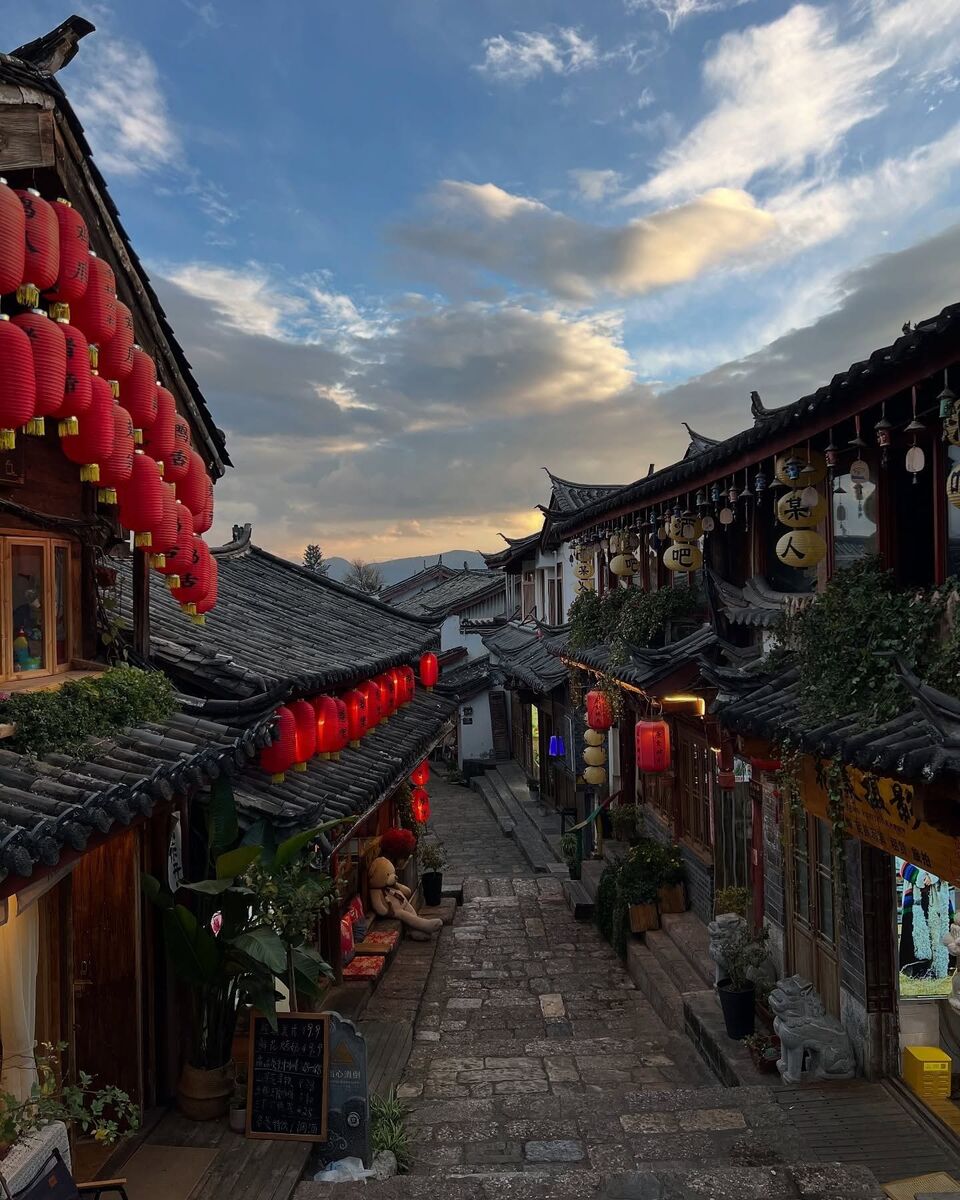
Beyond the carved beams and painted eaves of the ancient city of Lijiang, there lies a deeper Naxi beauty: a rustic simplicity that has withstood the test of time, a serene harmony with nature. High-end living is not about opulent accumulation, but about allowing the soul to touch the texture of time in the cradle of Naxi culture.
The waterways of Lijiang twist and turn a thousand times, yet always leave a blank space at a certain bend, embodying the Eastern aesthetic of wabi-sabi. A true deep dive is to卸下尘嚣, take residence in the ancestral earthen houses of the Naxi people, to read poetry in the faded wood carvings, to contemplate in front of the faded murals. The luxury here lies not in gold and jade, but in an ancient blue tile, the wild grass growing between its cracks, and the spiderwebs trembling in the morning light—the most honest strokes of time.
In the morning, follow the Dongba priest to read the ancient Dongba pictographic script, more ancient than oracle bones, as you caress the faded cinnabar on the scrolls with your fingertips. Watch as he dips a pine branch into the dew, writing the primal forms of "wind," "clouds," and "sun and moon" on the red earth. In the afternoon, the old silversmith's hammer sounds steady and slow, each strike pounding out a century of patience, not striving for perfection but leaving the warmth of handiwork in the smallest of gaps. As dusk falls, venture deep into Xue Song village to visit an elderly woman who is a master of song, listen as she sings "Lu Ban Lu Yao" in the ancient Naxi language, her voice like jade, like flowing water, shattered yet complete, like all the transient beauty in this world.

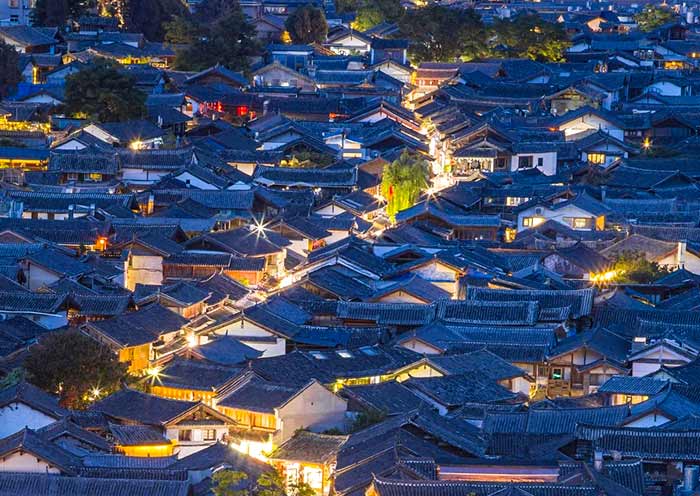
To reside here is not just to find a place of rest for the body, but to learn to embrace the beauty of imperfection for the soul. The old pear tree in the courtyard is ancient, its trunk hollow, yet it still blooms with a full branch of snow-white blossoms in spring, a tribute to the Naxi people's admiration for life—to grow thorns in遗憾, to bloom new flowers in decay. At night, lying on the high-thread-count cotton and linen bedding, listen to the intermittent sound of the stream outside, the dim light like the candlelight of an old era. This is the Eastern aesthetic of wabi-sabi: imperfect, transient, incomplete, yet in the quietude, it allows one to see one's truest self.
A deep cultural journey through Lijiang's Naxi heritage is to live within the folds of time, to feel the serenity of life in those disappearing crafts and ballads. True "luxury" does not point to the value of objects, but to approaching the simplest breath of the land and the gods with a heart of reverence. In the tea room in the corner of the ancient town, brew a pot of Pu'er tea with snow water, the outside noise fades away, the palm is still and warm—perhaps there is no better phrase than "not a wasted journey" to describe this moment. The true wabi-sabi has already taken root in the heart.

Share Your Thoughts
Have you ever experienced a farm stay in China? Share your thoughts in the comments below!
Join the Discussion →Ready for a stay?
Pugui Mountain Retreat — wabi-sabi living at 22°C.
Related Reading
Tengchong · Tanggu Solitude: A Healing Stay in Eastern Wabi-Sabi
Amidst volcanoes and wetlands, guided by hot springs, nestle
Serenity Journey in Shangri-La: Encountering Aesthetics of Wabi-Sabi Amidst the Plateau's Light and Shadow
At the foot of Shika Snow Mountain, an old Tibetan rammed ea
Solitude in the Heart of the Rainforest: An Elite Residence Diary from Xishuangbanna
As the morning mist drifts over the eaves of the Dai village